

Raising Confident Learners: A Parent’s Guide to Growth Mindset in Piano
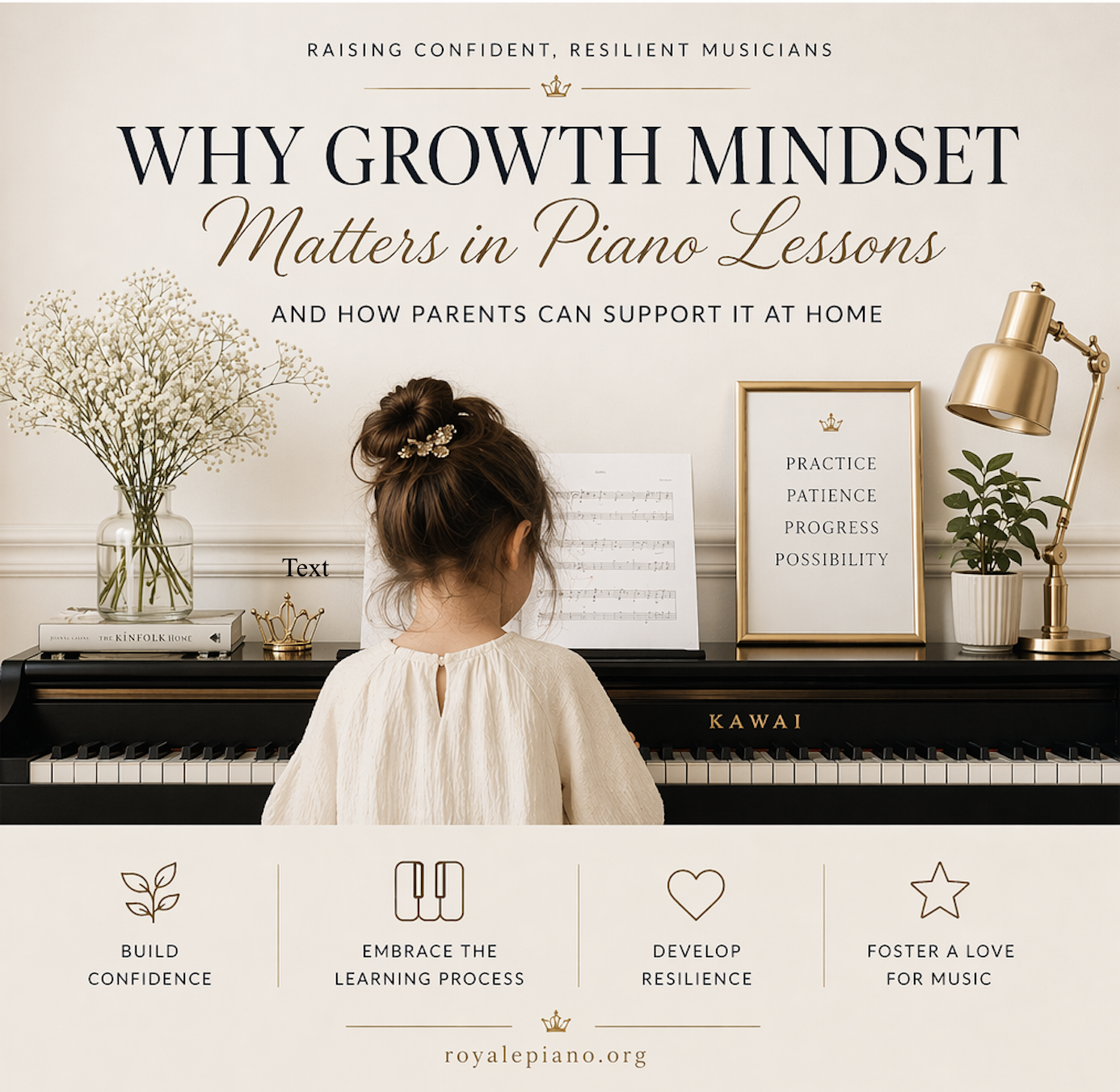
At Royale Piano, one of the most important things we do is nurture in students not just musical ability—but the way they approach learning itself.
Many children begin piano with excitement, but are often quickly discouraged the moment they encounter:
difficulty
mistakes
repetition, repetition, repetition
These moments are not signs that something is wrong. They are where real growth begins.
🌱 What Is a Growth Mindset?
A growth mindset is having the understanding that musical ability—or any ability—is developed, not something inherent that a child either “has” or “doesn’t have.”
So instead of:
“I’m so bad at this”
“This is too hard, I can’t do it”
“It’s never going to work”
Students begin to say:
“I’m still learning this”
“Let’s try that again”
“I think I’m getting closer”
“I don’t know how to do that yet, but I will learn”
This shift is subtle, but deeply transformative.
Why This Matters So Much in Piano Lessons
The piano can be one of the most honest teachers a child can have.
It requires:
patience
attention
repetition
emotional regulation
It teaches there are no shortcuts unfortunately to beautiful playing.
Because of this, students who develop a growth mindset:
stay engaged longer
build confidence naturally
become independent learners
Rather than relying only on external praise, they begin to trust the process and find motivation within the experience itself.
🌼 How to Support this at Home
1. Shift Praise Toward Effort
Instead of focusing only on the outcome, try noticing consistency, focus and your child’s willingness to try again.
For example:
“Wow, that section looks really challenging. I noticed you stayed with it the whole time.”
This builds real confidence and emphasizes effort.
2. Reframe Mistakes - Consistency Over Perfection
In the learning process—especially at the piano—mistakes are not interruptions. They can serve as guidance, they are information.
They are part of how students begin to understand what to adjust, refine, and improve in their practice.
You can say in a gentle, calm and respectful tone:
“That’s a really good place to slow down for a moment. Let’s take a closer look and understand what’s happening there.”
This helps remove pressure and replaces it with curiosity.
Over time, this encourages students to approach their practice with more awareness, with more confidence, and more trusting of the learning process.
3. Try to Avoid “Natural Talent” Language
While well-intentioned, phrases like:
“You’re so talented!”
can unintentionally create pressure.
Instead try emphasizing like this:
“You’ve learned how to do something new. That’s really good work, I can really see the amazing work you put into that.”
When children begin to understand that excellence comes through diligent patience, effort, growth and consistency, they will become wiser, more resilient, more confident, and more willing to keep going even when things are hard and confusing.
Over time they won’t just learn how to play the piano, but they learn how to learn.
